

Bridging the Divide: The Story Behind Xcelevate’s Mission
At sunrise in Chennai, a small group of young men and women gather together for their morning routine. Some stretch in silence; others review coding notes while sipping tea. Among them is Megha (name changed), whose father runs a small tailoring shop. Until a year ago, she had never touched a laptop. Today she is preparing for a technical interview with a global bank.
Her journey captures the larger story of what Xcelevate is doing for hundreds of young people like her. Helping talented individuals prepare themselves for an opportunity they could not even dream about.
The Hidden Crisis in India’s Youth
The world looks at India’s population growth and frowns. Too many people! But the truth is that we have a young population. And our numbers are our biggest strength. Imagine how much of a market we could create internally, if only these youth had the means. So though India’s youth population is its greatest promise, yet unemployment numbers tell another story. Almost sixty percent of unemployed Indians are between 15 and 29 years old. Among the underprivileged, nine out of ten are jobless or working in unstable, low-income jobs that barely sustain them. Three out of four lack even basic digital literacy.
These numbers do not reveal the full picture. For every young person who gets a job through formal education or family connections, there are hundreds who never get noticed because they do not have the right documents, degrees, or networks. The barrier is not ability. It is access.
Employers, too, face a paradox. They need skilled and dependable workers, but the hiring system filters out those who could become their most loyal employees. And many of these employers burn their fingers giving opportunities to those who were born with a silver spoon. Only to realize too late that they never knew the value of silver.
And that is the other problem that Xcelevate is attempting to solve.
How It All Began
When Xcelevate’s founder, Umang Doctor, led a digital banking team, he struggled to find job-ready talent. Despite thousands of applications, very few candidates had the right mix of technical skills and professional attitude. At the same time, he saw bright young people in small towns and villages who were eager to learn but had no bridge to the corporate world.
He decided to build that bridge. Umang started Xcelevate to prove that potential can never be discovered if it doesn’t meet opportunity. The goal was simple: identify those who truly need an opportunity, train them rigorously, and connect them to organizations willing to look beyond degrees.
Finding Those Who Deserve a Chance
In the beginning, applications poured in from every corner of the country. On paper, most candidates looked similar. Low income, modest schooling, and very limited exposure. But experience revealed how unreliable paperwork can be. Income certificates can be misleading, and academic records do not show what a family goes through to support a child’s education.
To solve this, Xcelevate created a Multi-Dimensional Underprivilege Assessment. Instead of relying on income alone, the team began to look at six areas of a candidate’s life: financial stress, access to education, exposure to work, health challenges, social barriers, and gender bias. Every factor was verified through home visits and personal interviews.
The process is demanding. Only about five percent of applicants make it through. But those who do are the ones who need it most and are determined to make the opportunity count.
And that’s only part of the problem. Once underprivilege is identified, the next step is to check if they can withstand and absorb what is being taught. And then ensure that they are able to use it. There are many who truly deserve this opportunity, but are unable to clear the capability threshold.
Learning the Gurukul Way
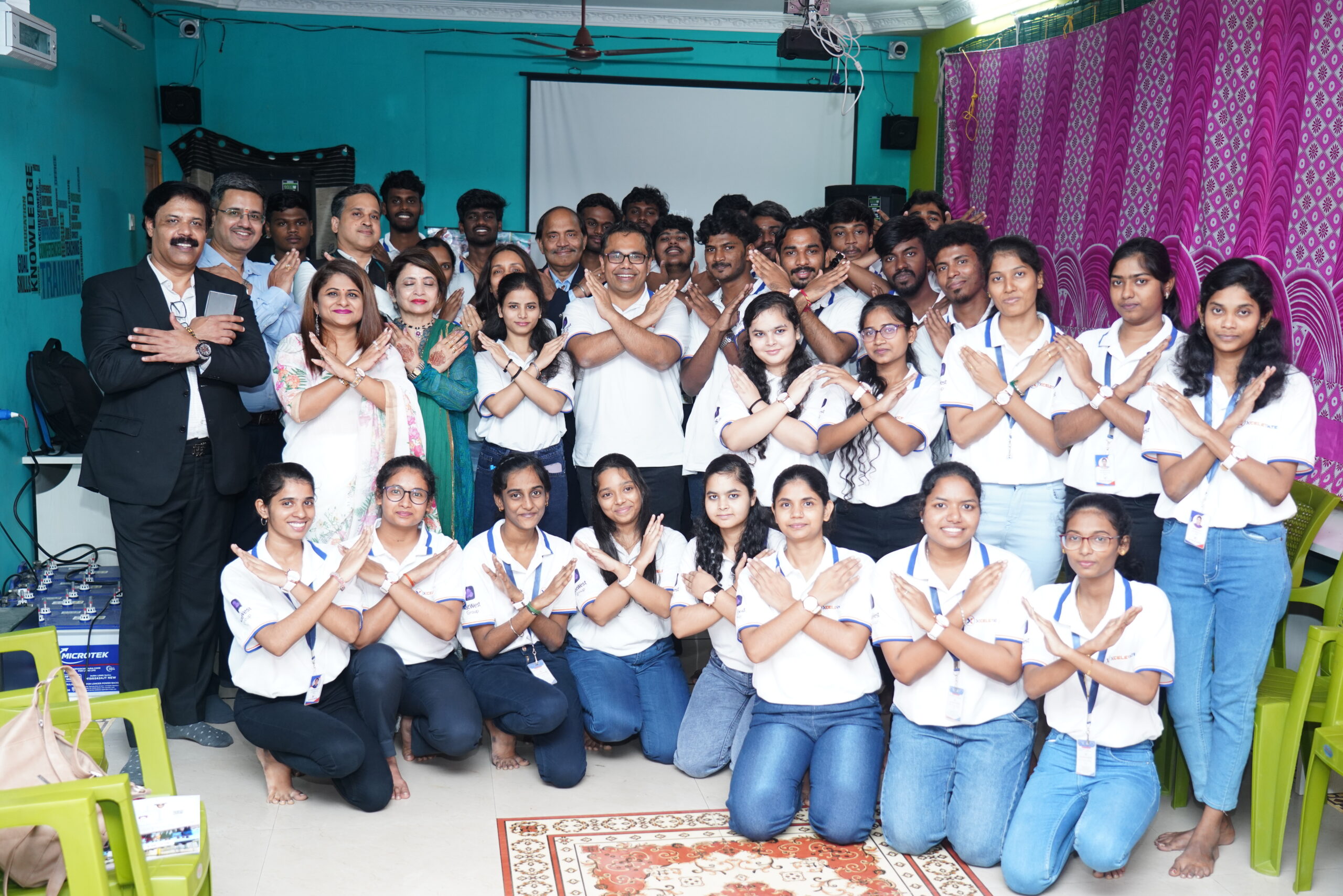
Selection is only the beginning. The real transformation happens inside the Gurukul, Xcelevate’s modern residential learning center. Here, apprentices live and study together for an entire year.
The environment combines discipline and mentorship. Mornings begin early with exercise or reflection, followed by classes in programming, communication, and ethics. The system is designed to teach them that not everything is taught in a classroom. They have to learn to get along with each other, cooperate together, and get things done. Industry mentors visit regularly to guide them on teamwork and workplace behavior. Evenings are reserved for peer learning and personal study.
The idea is simple: you learn best when you live what you learn. The Gurukul setting creates structure and accountability that online courses can never offer. It teaches resilience, focus, and mutual respect. And these are qualities that many employers say are the hardest to find.
Proof in Practice
In partnership with NatWest Group, Xcelevate tested this approach by training underprivileged youth for technology roles. The results exceeded expectations.
- Eighty-three out of eighty-eight apprentices were hired as permanent employees.
- Eighty-five percent were women from rural and suburban backgrounds.
- Every single hire was a first-generation IT professional.
- The average starting salary was six lakh rupees per year.
- Several were promoted within two years, and attrition is almost zero.
These numbers are not just metrics; they represent lives that have moved from survival to progress. Ruksana, the daughter of a tailor, now writes code for a global bank and mentors others. Another apprentice, Anjali, teaches Java to new batches while pursuing a degree funded by her employer.
Why This Model Works
The success of Xcelevate lies in how it blends the old and the new. The Gurukul environment provides the discipline and focus of traditional learning, while AI-enabled tools personalize lessons to each student’s pace. Mentors bring industry relevance, and peer learning builds confidence and collaboration.
For employers, this means receiving candidates who are not only skilled but also grounded, dependable, and eager to grow. For investors, it is a model with measurable outcomes and long-term social return.
Scaling the Impact
The first residential Gurukul in Chennai is already running full-time, training cohorts in software engineering and business roles. By 2030, Xcelevate plans to establish four regional centers across India. Each will follow the same model. Rigorous selection, residential learning, and corporate placement.
The organization’s vision is to create a continuous talent pipeline where hidden brilliance from villages and towns meets the hiring needs of forward-looking companies.
A Future Worth Building
Xcelevate’s mission is not about charity. It is about fairness, opportunity, and belief in the power of human effort. By working with employers who share this vision, the organization is proving that quality and inclusion can go hand in hand.
When companies open their doors to talent that was once invisible, everyone wins: the organization, the individual, and the nation. There are two ways in which you can help. We need funds to sustain this model. If you have unused CSR funds available, do reach out to us. You can also sponsor individuals.
Second, we also need organizations to come forward and give us their recurring requirements. We can promise you this. Once you have hired one of our apprentices, you’ll change the way you hire
